Chronicle
Aside 1: A Stop Along the Way…
By Jorge Duro · March 16, 2024
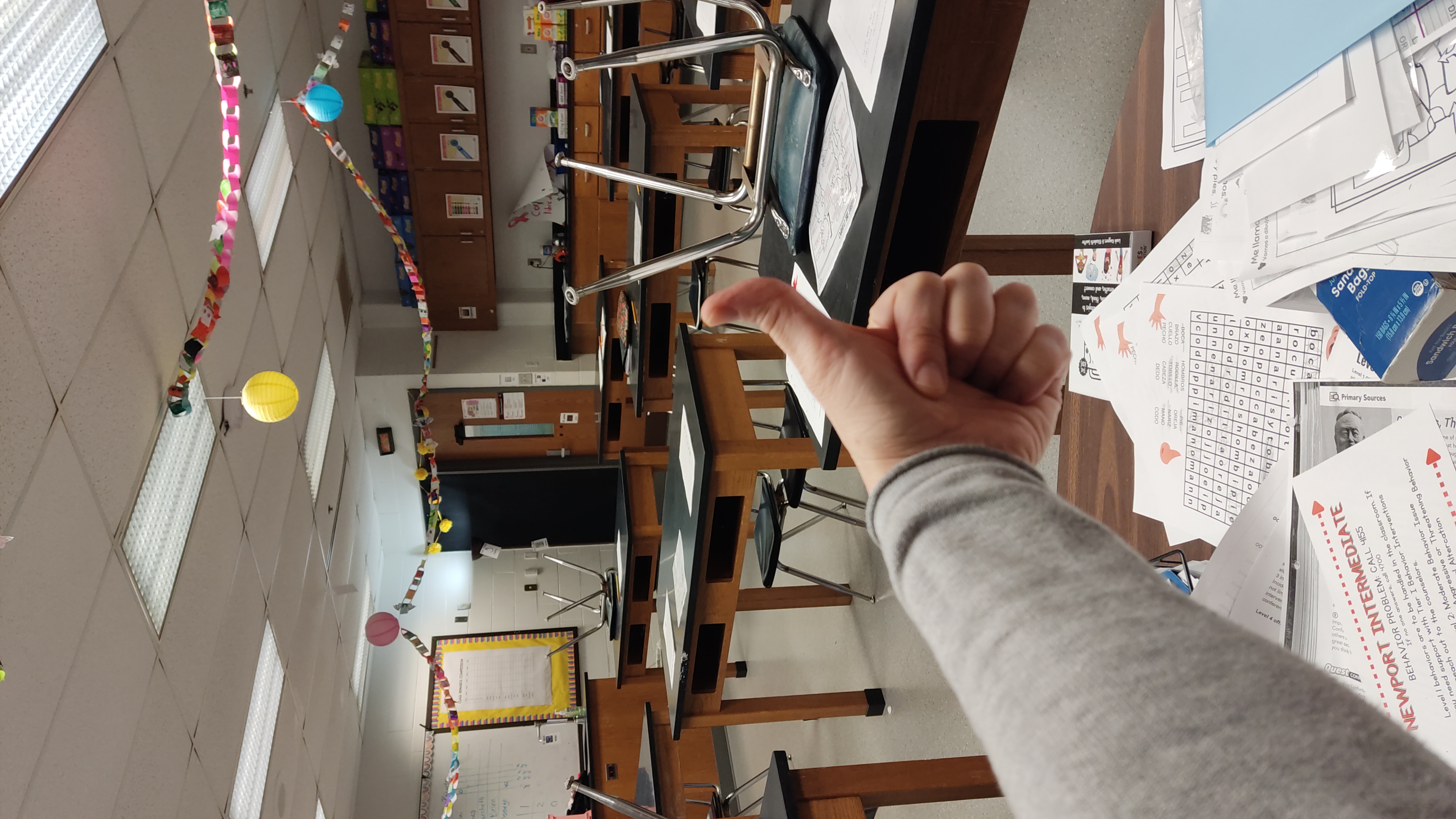
I have had to stop. The presses ground to a halt this past Monday, March 11, due to a slight indisposition of the author. However, days later, the machinery resumed its task so as not to leave the reader weightless of reading and facing the void of the blank page.
so as not to leave the reader weightless of reading and facing the void of the blank page.
That is why I have created this ‘Aside’ as an alternative text to the continuation of the chronicles, since putting these writings together takes me at least five days or so. To give you some background, and better context, let me remind you that today, Saturday, March 16, I had committed to my own ‘editor’—that is, yours truly, the very one speaking to you here—to release the long-awaited chronicle 14. ‘On the Water’: Party at Lake Cumberland. However, the designs of life would have it that right at the start of the week I fell under the effects of a mild ‘bout of the flu’, a setback that kept me laid up in bed for two long days and two endless nights, which led to the annulment of all my faculties as a scribe, and almost as a living being. I therefore repealed any activity other than my urgent recovery.


I therefore beg the esteemed reader’s forgiveness, and as an alternation to what has happened, I present them with this other text, a ‘rara avis’ of its kind, with which I make amends for the offense committed: the missing continuation of the adventures that the character I myself portray, as a Spanish teacher in Kentucky, began that ‘magical’ weekend with his new gang of American friends. All of them found and met in a way as casual as it was serendipitous, hence my leaning toward the adjective ‘magical’, since not even by planning it would things have happened just as they did: reality always surpasses fiction, and that is why I decided to tell it (see, on the subject, from chronicle 9. ‘On Land’ (Part I): Serendipities through 13. ‘On the Water’: Just in Case).
On the other hand, and at the same time, I wanted to publish this other piece above all for my own sake, so as not to fall away from the pleasing and seductive activity that is the art of writing. It would be like quitting the gym of my writing, the style-training classes I impose on myself. At this point, the reader may well ask: “And how does one learn to write?” Well, one learns by writing, but not without first reading (a craft that is likewise learned by reading)—reading as much as one possibly can, reading above all the classics, and the good contemporaries, and especially the Hispanic tradition (which is the one I know and admire best), from La Celestina, the Lazarillo, or Cervantes with the birth of the novel through his illustrious Don Quixote, to the universal legacy of the Mexican Sor Juana Inés de la Cruz, by way of a Baltasar Gracián, who displays his philosophical vision of the world in learned and sublime fashion in El Criticón (as in the beautiful seventh crisi: The Fountain of Deceits); or from the free expression of the Galician Rosalía de Castro, to a Galdós renowned for the great renewal he brought to the Spanish novel, ossified until then in an already outworn Romanticism; by way of the esperpento-style inventiveness of Valle-Inclán, or the rebellion of the characters ingeniously conveyed to us in Mist by the brilliant Don Miguel de Unamuno.
so as not to fall away from the pleasing and seductive activity that is the art of writing.
“And how does one learn to write?” Well, one learns by writing, but not without first reading…, reading above all the classics, and the good contemporaries,
And that is without citing the sublime Spanish American writers, such as the ‘magical realism’ of the Mexican Laura Esquivel (Like Water for Chocolate), that of the Chilean Isabel Allende (The House of the Spirits), or that of the superb Colombian García Márquez (with the universe of Macondo in his One Hundred Years of Solitude); by way of the inventiveness of the Argentine Borges (in narratives such as The Aleph), or the impact caused by the hypertext technique of Julio Cortázar (the very concept of what the internet is today), with Hopscotch; or the understanding of society achieved by the Peruvian Vargas Llosa in masterfully reflecting that authoritarianism of Latin American violence and dictatorships, as in The Time of the Hero, or The Feast of the Goat.
And if we were to speak of contemporary authors, how could I fail to mention the great prose of Almudena Grandes (The Ages of Lulu, Te llamaré viernes, or The Frozen Heart); the absurdist humor of Barcelona’s own Eduardo Mendoza in No Word from Gurb; the personal growth and drive to overcome conveyed by Andrea, the female protagonist of Nada, by Carmen Laforet; the stories of Obabakoak by the Basque Bernardo Atxaga, where through a compendium of tales he masterfully depicts the intricacies of human psychology.
I could also speak of the advisability of reading certain distinguished women writers, such as the Cuban-Spanish Gertrudis Gómez de Avellaneda (who cultivated the novel, theater, and poetry), for the delicate treatment she gives her female characters; or the exiled Madrid-born Clara Campoamor, a tireless fighter for women’s rights and one of the leading champions of women’s suffrage in Spain.
And if I had to turn to authors of non-Hispanic languages, I would not fall short in naming works that left a deep mark on me, as was the case with Shakespeare, or with Blindness by the Portuguese José Saramago; The Mysterious Island by the Frenchman Jules Verne; philosophical essays such as Existentialism Is a Humanism by his compatriot Jean-Paul Sartre; or the magnificent historical novel Memoirs of Hadrian, by the French novelist, essayist, poet, playwright, and even translator Marguerite Yourcenar, a work to which, incidentally, she devoted a decade of research and writing.


Not like what happens nowadays, spreading as fast as gossip in a convent: so many men and women jump on the bandwagon of the writer’s trade as quickly as their hand runs loose, and they publish or even self-publish what they claim to call novels of the crime, romance, or fantasy sort, to give some of the clearest examples. And they rely on splendid covers as bait, where the image alone already has more quality than the entire book put together.
they jump on the bandwagon of the writer’s trade as quickly as their hand runs loose, and they publish or even self-publish what they claim to call novels of the crime, romance, or fantasy sort,
Not to mention the disservice also done to them by artificial intelligence (AI), which, at the stroke of a ‘prompt’, or ‘instructions’, quickly churns out a piece of whatever length and type may suit, so that by changing four expressions and a scant four words after the fact, they can promptly obtain a “work” that is neither theirs nor much of a work at all, since it will always lack that human ‘touch’ that artifice will never manage to attain. The fact is, anyone writes a book these days, or offers a writing workshop. Like the other day, when I sent one of my chronicles to a certain person on Instagram and they replied with their writing workshop. At that moment I thought: “the hens coming in for the ones going out,” as our own José Mota would say. Without even introducing themselves or anything, like a “hey! there you go.” I, at least, say hello, say who I am, and give the reasons why I share my chronicles. So I wrote back to thank them for the information and to point out that they could at least have taken the trouble to reply to me in a more human way, and not like a mere ‘bot’, or artificial entity. I did not know whether I was dealing with some new android. Instantly they sent me an audio message—why bother writing—with a clearly human voice, thanking me succinctly and adding that they “would try to take a look” at the link I had sent (which they surely had not even glanced at to see what it was about), and from then until today, silence. But oh yes, they made it quite clear to me that they had worked for fifteen years in the service of one of the highest-circulation national newspapers. Long live the quality some ‘journalists’ have as human beings.
At that moment I thought: “the hens coming in for the ones going out,”
Well, this and more is what the evolution of the new capitalist market we are heading toward has in store, a “surveillance capitalism,” as Shoshana Zuboff puts it, where we are more mindful of the success of our book on social media than of the quality of the book itself, to give just one example.
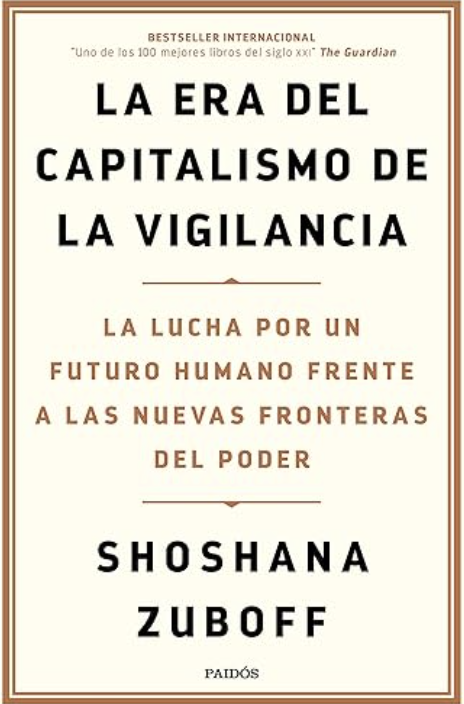
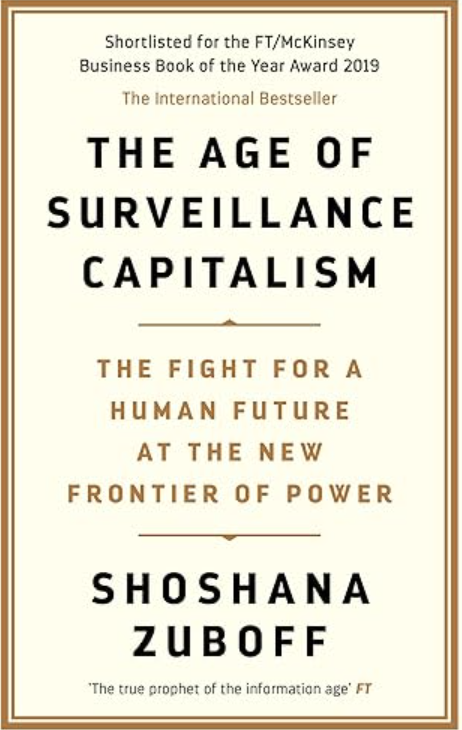
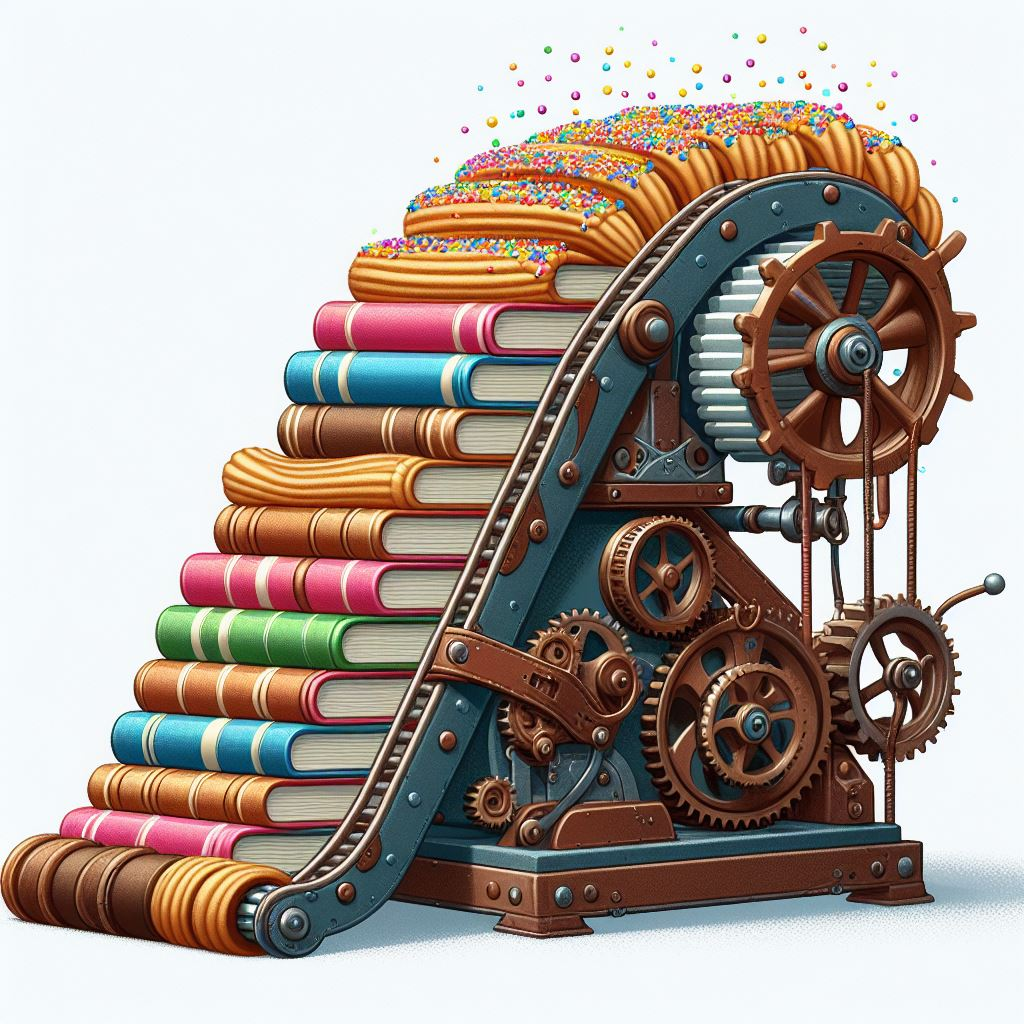
The truth is, we are facing a new evolution of the capitalist system, where what matters most now is that the ‘churro’-making machine crank out more churros and keep generating income, with hardly any regard left for the quality of what is written, for as my esteemed professor, Antonio Junco, once said at the University of Tübingen (Germany): “Jorgito, paper (and today the screen) will put up with whatever you throw at it.”
we are more mindful of the success of our book on social media than of the quality of the book itself, (…)
where what matters most now is that the ‘churro’-making machine crank out more churros and keep generating income, with hardly any regard left for the quality of what is written
The devastating effect all this will have—and in fact is already having, for one need only see the number of poorly written works flooding our bookstores—will be deeply harmful to readers and new authors alike. For the writer who feeds and forges himself on the reading of works of little substance or weight—let us give them a nickname, something the English and the Americans are very fond of: the “fakebooks”, the “phony books” as it were, not only riddled with errors of spelling, coherence, and cohesion, but also marked by a cultural, expressive, and lexical poverty so acute it becomes painful, to say nothing of the lack of training—will give rise to what we might likewise call a “fakewriter” or “phony writer”, who will not take long to sink into oblivion, no, but the damage, however minimal, will already be done. Even if, selfishly, he or she will have achieved the goal: to publish, or to self-publish. And here is where the snake will begin to bite its own tail and the vicious circle will start spinning like a carousel, for once again the reader who feeds and forges himself on those flimsy works will never come to appreciate that almost mystical experience one feels upon finishing a good book or a masterpiece. And I am not saying we should all write a ‘Quixote’, or be a García Márquez, no, but that we should draw near to or partake of their readings and of their essence, of the great and the middling ones, first catching the contagion of their readings, and only then set out on our path as scribes, as creators—and if not, let us sit still, for one lives very well as a reader.
the writer who feeds and forges himself on the reading of works of little substance or weight, the “fakebooks”, the “phony books” as it were
and if not, let us sit still, for one lives very well as a reader.
With this last point, I close the subject, making a very special reference to the incredible reading sensation being stirred in me by the latest thing I am reading: Una historia ridícula (2022), by an author not often mentioned but already among the greatest—I mean the winner of the National Prize for Spanish Letters (2022), the novelist and columnist from Extremadura Luis Landero, creator of such celebrated titles as Juegos de la edad tardía (his first work), or La última función (published just a month and a half ago).
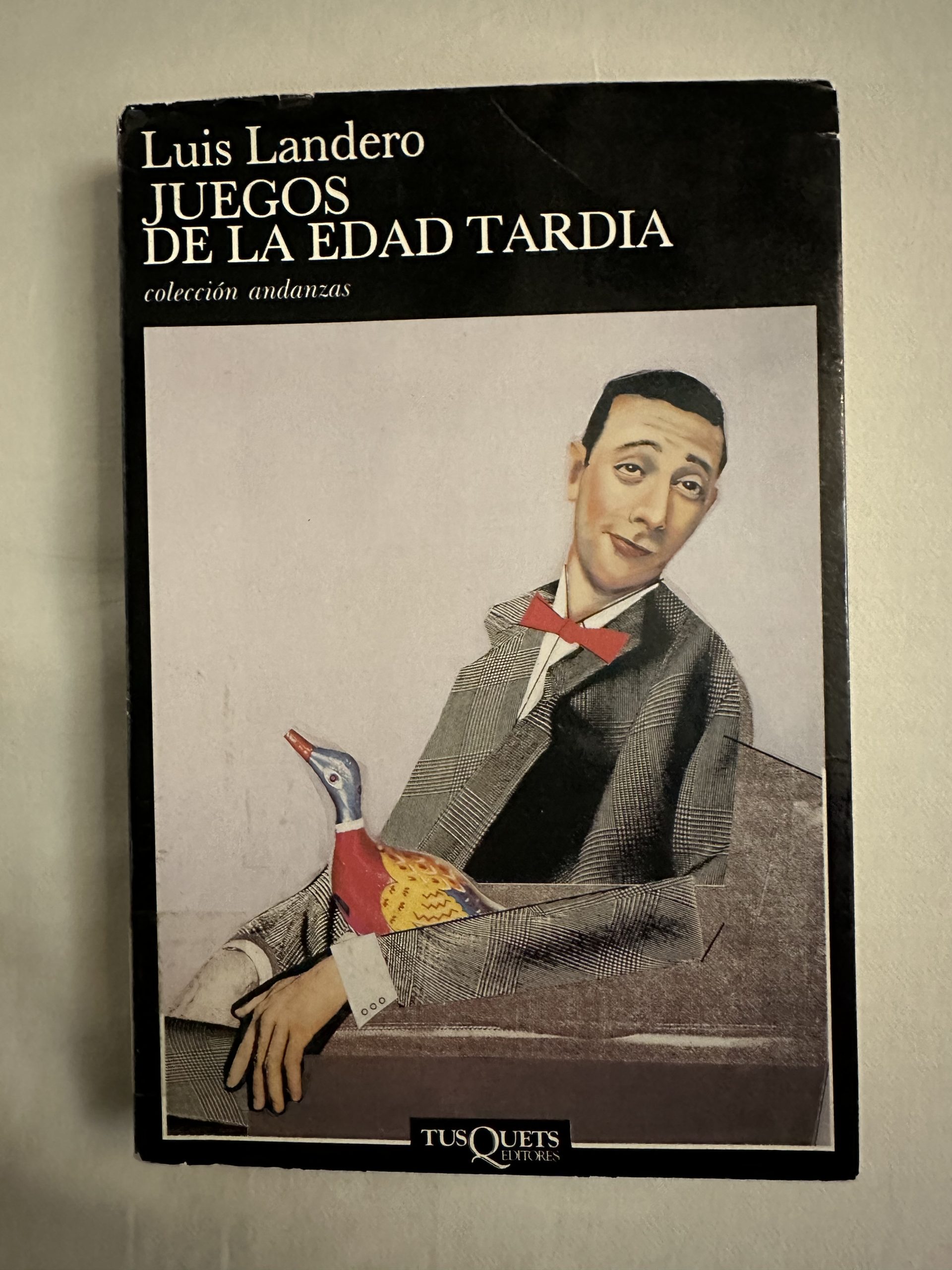
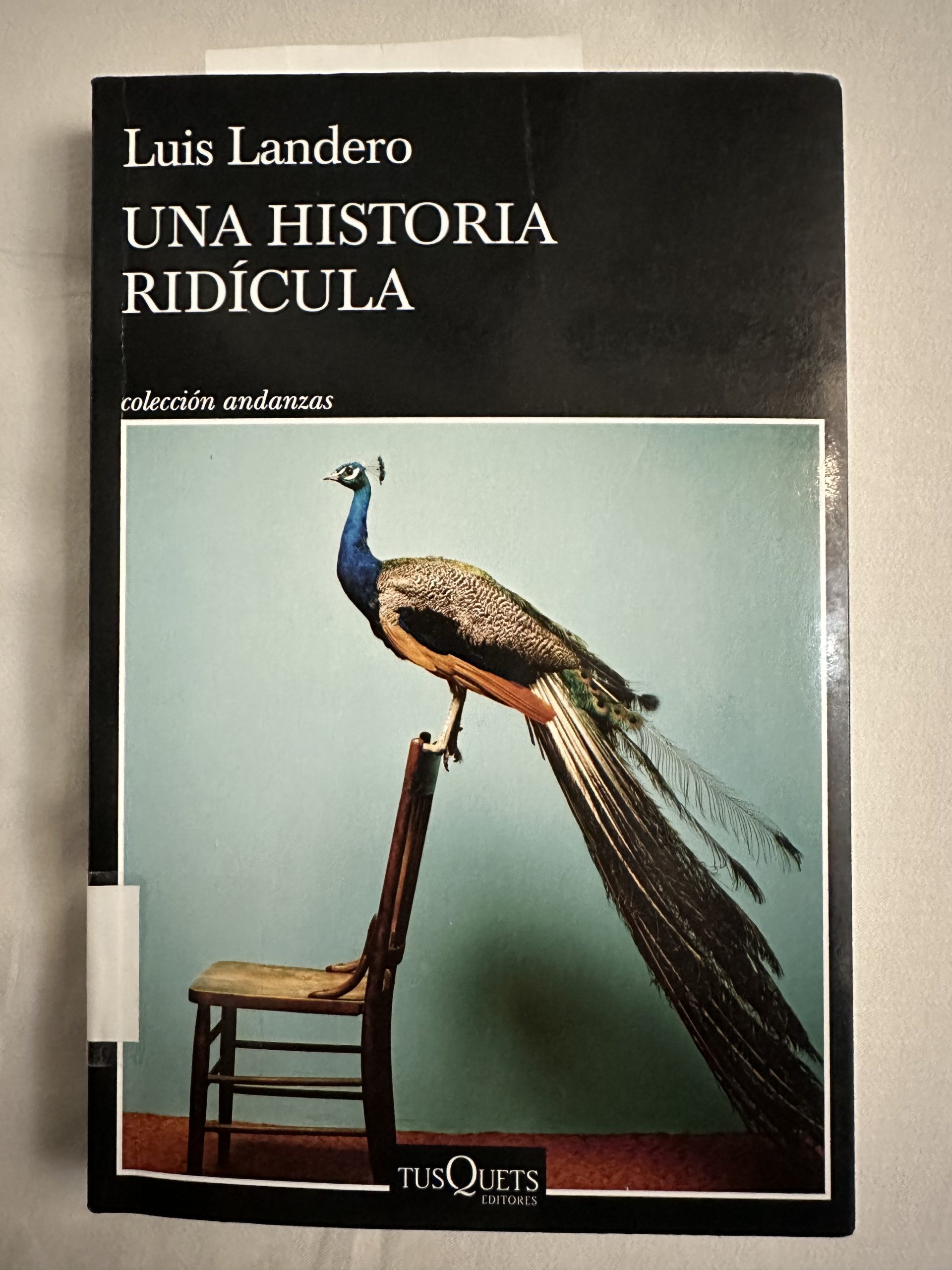
I mean the winner of the National Prize for Spanish Letters (2022), the novelist and columnist from Extremadura Luis Landero, creator of such celebrated titles as Juegos de la edad tardía (1983, his first work), or
La última función (2024, published just a month and a half ago).
– Next installment (Saturday, March 23): Chronicle 14. ‘On the Water’: Party at Lake Cumberland
Comments (17)
María
¡Preciosa crítica!
Jorge Duro
¡Preciosas palabras! Gracias marIA.
Enrique
Tio podrias dedicarte a escribir, eres el puto amo enhorabuena,ahora a esperar al proximo sabado un abrazo amigo jorge
Toyo
Te faltó mencionar a los famosillos de la tele y de youtube que sacan libros de mierda (que ni siquiera escriben ellos), cuyo único valor es el «reclamo» de la fama de su personaje, algo así como cuando se sobreexplota un producto y hacen cromos, camisetas, toallas de playa, patatas fritas y hasta colonias de yo qué sé…, de Bob Esponja, por ejemplo. 😆
Virtu
Comparto tu opinión con respecto a la lectura. Para escribir, obviamente hay que leer. A los buenos. De ellos sí se aprende, por supuesto. La mayoría de los libros que mencionas, he tenido la suerte de leerlos. Porque nos obligaban a ello, en el instituto, y luego descubrías que disfrutabas a tope con aquella lectura. Nunca podré agradecerlo bastante. Sin olvidar que en mi casa siempre había buenos libros y todos leíamos, y nos encantaba hacerlo. Hoy los jóvenes lo tienen más difícil porque hay demasiadas actividades atrayentes, al margen de la lectura, pero esa es otra historia. En cuanto a la proliferación de escritores, es cierto, ya hay casi tantos como editoriales, que no dejan de crecer. Sólo disiento contigo en un punto: la autopublicación. Para un escritor de nuestro tiempo, es la única opción que queda para ver una obra publicada. Sea buena o mala, que de todo hay. En mi caso, no me mueve el dinero ni las ventas, claro que no, sino el hecho de disfrutar de mi libro, en físico, y no perder lo que he creado durante años. A mí me basta con eso. Pero tienes razón, de todo hay en la viña del señor y el mercado se satura con obras que no merecen la pena ni llamarlas así. Por cierto, a mí también me gusta mucho Jean Paul Sartre, imagino que habrás leído La náusea, si no es así, te la recomiendo, sin duda la vas a disfrutar. Yo he perdido la cuenta de cuántas veces la he leído. Como siempre, un placer leerte. Gracias por compartir tus reflexiones. Un abrazo.
Jorge Duro
Excelente como comentario Virtu, como siempre. Puntualizarte que cuando me refiero a la autopublicación no la critico, solo aviso de que puede ser un arma de doble filo el hecho de tener al alcance de cualquiera el poder publicar y con lo que dejas en la calle, librerías, bibliotecas una obra que si no es buena y le falta hasta corrección, maduración, dicción puede hasta enturbiar el entendimiento de cualquier lector que se preste a leerla. Ahora, si hay alguien que quiere publicarse su libro y hacer una pequeña tirada de qué te digo yo, unos 200 ejemplares, para tener sus relatos y venderlos y/o regalárselos a los amigos, familiares, etcétera está en su pleno derecho e incluso lo apoyo. Ahora los que no escriben una buena obra y prueban a bombardear el mercado editorial pienso que no hay ni que temerle, ni hay problema en ello, pues el ojo del buen lector es sabio y sabrá si esa obra perdurará en sus manos hasta el final o no.
Jorge Duro
Sí, tienes razón, lo hablaba el otro día con el wemaster, que todo el que sale en la tele ha escrito un libro y lo presenta. En fin, digo lo mismo que al comentario de Virtu, y es que solo el sabio criterio del lector dará a esa obra el posicionamiento que se merece. Es como la música, hoy en día es más facil que nunca sacar una canción a la calle, con objetivos varios, pero que al fin y al cabo quién tendrá la última palabra de su 'éxito' o superviviencia será el público y desgraciadamente la inversión económica que le inyectes para que esa canción llegue lo más lejos posible.
Virtu
Completamente de acuerdo. Lo vemos cada día, es así. Actualmente no es fácil encontrar libros que merezca la pena leer aunque sin duda los hay. En mi caso, prefiero releer «libros antiguos», porque esos no decepcionan nunca. Por cierto, nunca te he dicho que me encanta el tono de humor que empleas muchas veces en tus crónicas, me encanta. Agradezco igualmente el hecho de que traduzcas del inglés algunas expresiones, frases, y demás, porque yo soy de la «vieja escuela» y sólo estudié francés. Gracias por tus escritos y por la generosidad de compartirlos. Abrazos.
Hedda Ibarra
¡Muy interesante! ¡Gracias por compartir! De acuerdo, está el que escribe por escribir y busca medio fácil para protagonizar, y los que escribimos con el alma, en mi caso poesía, incluyendo poemas migrantes que revelan el sentir de ser migrante en todas sus facetas, desde la tristeza, hasta la aceptación y el amor concebido a dos patrias. Tema que ha tocado el corazón de quienes se identifican con el estar aquí y allá, el cuerpo aquí, el alma allá. Te invito a un paseo por Amazon, para leer y acariciar el canto de un jilguero, en mi poemario Un jilguero en otra rama.❤️
Alda Inacio
Aquí en Brasil tenemos un dicho que dice «no necesitamos a los que nos quitan la alfombra, el tonto cae solo».
Guillem
Estoy totalmente de acuerdo contigo Jorge. Creo que la lectura es el mejor antídoto contra la ignorancia y la intolerancia( dos aspectos que van relacionados según mi parecer) entre muchas otras cosas. Si se leyera más a los clásicos como Platón, Séneca, Cicerón, etc se podrían resolver muchos problemas de la sociedad actual, peró por supuesto sin dejar de lado los grandísimos y grandísimas autores/autoras que has mencionado. De Luís Landero ya leí hace bastantes años «Caballeros de fortuna». Ya me tocará volverlo a visitar, apeovechando tu sabia recomendación. También irá bien acudir a los autores norteamericanos como Faulkner, Dos Passos, etc, ya que nos une la ilusión de vivir en los USA. Saludos!
Manuela
Me veo en la obligación de puntualizar que no todos los autopublicados son personas que se «suben al carro», muchos de ellos somos escritores que hemos decidido autopublicar y no buscar editorial, por distintos motivos y otra cosa es que, por supuesto, no todos los autopublicados utilizamos IA. De todas formas, yo a la utilización de IA en escritura le quito dramatismo. Primero porque, hoy por hoy, no está lo suficiente conseguida como para que no se note al leer el texto, resulta frío y a veces hasta chocante, frases incongruentes, sueltas… Segundo, que si llega el día en el que esté plenamente conseguida, cosa que dudo, y yo como lectora leo algo que me motiva, me da igual esté escrito por quien esté escrito, porque lo que busco es eso: motivación. Eso sí, que me lo digan, igual que cuando un libro está escrito por un autor «fantasma» también deberían decirlo y no lo hacen, si engaño es uno, engaño es lo otro. La lista de obras que has mencionado es fabulosa, la suscribo. Y por último, y no menos importante, sino todo lo contrario: cuídate. Saludos.
Carmen Sanfeliz
Crónica muy valiosa. Te felicito. Formarse antes de intentar publicar es fundamental para no «perpetrar» escrituras y leer calidad como la que indicas, amigo. Un apunte sobre las lecturas: leer sobre todo obras escritas en la lengua en la que uno vaya a expresarse y no traducciones, por buenas que sean. Y no publicar hasta que no estemos muy seguros de que tenemos un buen manuscrito. Huyamos de la posibilidad de pertenecer al grupo de NO escritores que escriben NO libros para NO lectores. Un abrazo.
Jorge Duro
Corroboro todo lo que dices, sobre todo lo de leer obras en la lengua materna, anda que no he encontrado diferencia entre leer Una historia ridícula de Luis Landero, y El profesor, de Frank Mc Courtpremio Pulitzer, y todo lo que tú quieras, pero ante la calidad de Landero, es que ni le llega a la suela de la portada. Esto es como ver una película, siempre en versión original.
Marcelo
Me parece justo y necesario aplaudirte una y mil veces más por el talento increscendo de tus escritos. Es indudable como con cada publicación logras captar la atención del lector a través de las vivencias que dibujas con tus letras. Todas mis felicitaciones y respetos 🙏
Jorge Duro
Me parece justo y necesario responderte con una gran loa a tu comentario. Gracias nuevamente por seguir fiel a mis publicaciones. Veo que disfrutas de mis lecturas y eso me insufla ánimos para seguir en la batalla, 'dibujando' con mis letras las vivencias de este humilde y sencillo profesor. Gracias de corazón.
pinterest downloader video
Thank you for sharing this insightful article! I found the information really useful and thought-provoking. Your writing style is engaging, and it made the topic much easier to understand. Looking forward to reading more of your posts!